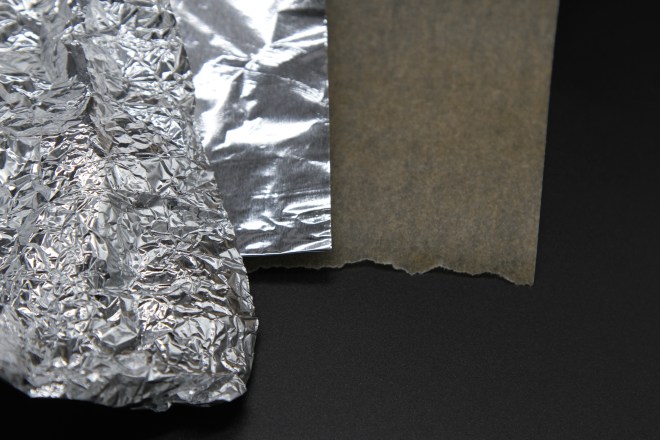
Do you go through lots of aluminium foil? If you are a keen cook, you probably use quite a long length every year. I remember my grandmother used to treasure every piece of aluminium foil she had. Coming from the generation who had to make do with almost nothing new during the Second World War, she was an expert at keeping things going, re-using multiple times and then, when it was not possible to use it any more, finding some ingenious second or third life for an object. She was particularly adept at keeping foil going for ages. In fact I can’t remember her ever pulling new foil from a roll.
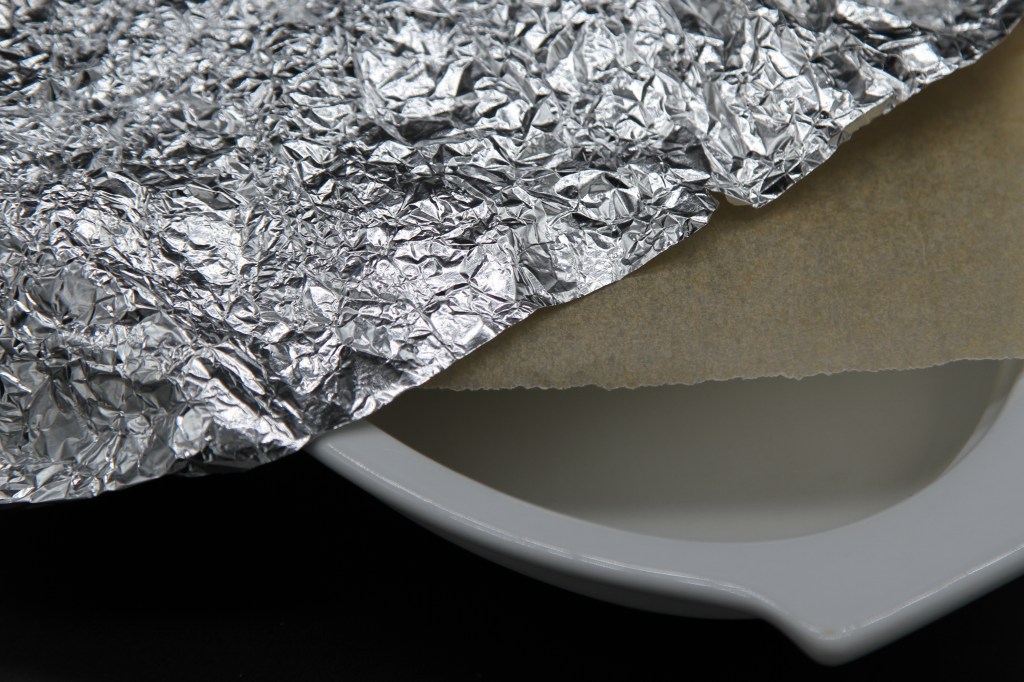
With aluminium foil so readily available, it is easy to get used to the idea of just going straight for the pristine roll every time. And discarding anything slightly crinkled. But I’ve observed that there’s a fair few people who do actually like to re-use aluminium foil too. If those people discard aluminium foil it is either because it is ripped (perhaps they’ve taken it off their culinary centrepiece with the flamboyance of a virtuoso whilst receiving rapturous applause and a standing ovation) or it has food stuck to it. If it is the former, perhaps toning down the bravado during the delicate operation of foil removal is called for. But what do we do if it is the latter? This is where the trick of lining first with greaseproof paper can sometimes help. The slightly counter-intuitive idea is that greaseproof is often considerably cheaper and uses less energy in manufacture, so has a smaller environmental footprint. The other thing is that of all materials we consume, probably aluminium is the most important to recycle. So when we are requested to put only clean aluminium in the recycle bin, the prospect of scrubbing that encrusted food off the aluminium makes even the most determined of us think whether it is worth all the bother. And so it might just end up in the general waste, with food still encrusted and all but forgotten about. So a greaseproof layer should make it easier to recycle the aluminium too.
Perhaps at this point it is worth a little exploration of the history and manufacture of aluminium. Aluminium is one of the most abundant elements in the Earth’s crust (third after oxygen and silicon), where it is commonly found as bauxite (aluminium oxide). However, due to the reactivity of aluminium, it was incredibly difficult to reduce the aluminium oxide to aluminium using traditional techniques. Aluminium metal was more expensive than gold in the early part of the nineteenth century. It was not until electrochemistry came along that there became a route for large scale aluminium manufacture. Nowadays, aluminium manufacture is on a vast scale. But to make it we need huge quantities of electricity. That explains the high price and, unsurprisingly, its large environmental cost. The carbon intensity of aluminium production is heavily influenced by how green the electricity grid is. There can be the equivalent of 20 times the weight of aluminium in carbon dioxide emissions produced when using electricity grids reliant on coal. This can drop to 7 times with a 100% hydroelectric grid. Since recycling skips out around 95% of the energy required, it shows just how important a metal it is to recycle. The aluminium industry have a summary of aluminium’s carbon footprint here.
 Living Laudato Si'