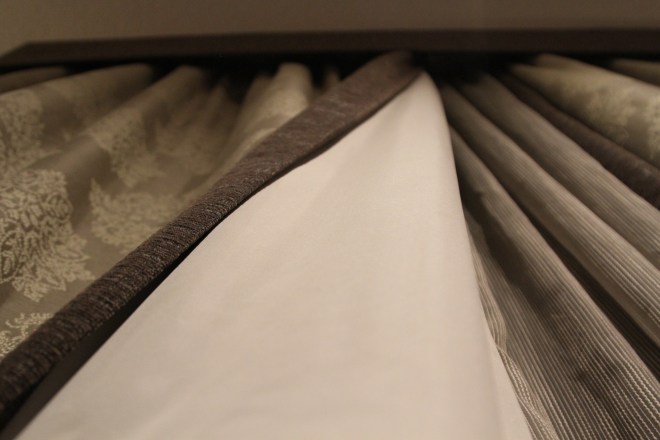
When you think about it, drawing curtains when the night is cold makes sense. Night time temperatures in winter are generally colder than daytime temperatures. Even if the sun is low in the sky, there is still a warming effect from sunlight during the day. Maybe we can recall that the coldest winter nights are those starry nights which may well leave a thick frost on the ground in the morning. So drawing a layer of insulation across our windows to slow the escape of heat at night is quite good. It also makes sense that thicker curtains tend to be better. Best of all are those curtains with a lining: two layers of fabric. The lined curtains create a trapped air pocket between the fabric layers. Trapped air pockets are used extensively in insulating materials because air is a poor conductor of heat. We use this with quilts and clothing and indeed it is the trapped air in wool, fibres, foams and expanded polystyrene that give those materials their good heat retention properties.
Not only are lined curtains thicker and more hard wearing, but the lining also provides a barrier against the bleaching action of the sun in summer. They can have the effect of reducing draughts from gaps in windows too. Finally they can cut out more of those unwanted lights at night (street lights and car headlights) that can reduce the quality of sleep.
Made-to-measure curtains can be quite expensive. Fortunately there are some budget offers available and sometimes good quality lined curtains appear in the local charity shops. If you are adept at sewing or making things then lining your own curtains might be an option too.
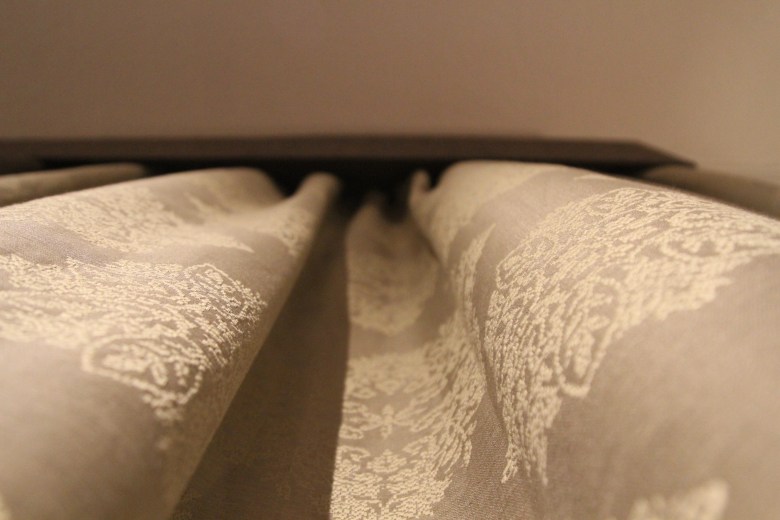
A simple demonstration of the effectiveness of curtains is to check the temperature between the curtains and the glass first thing in the morning after a cold night. It can be surprisingly cold, showing that the curtains really are providing a barrier to heat loss.
 Living Laudato Si'