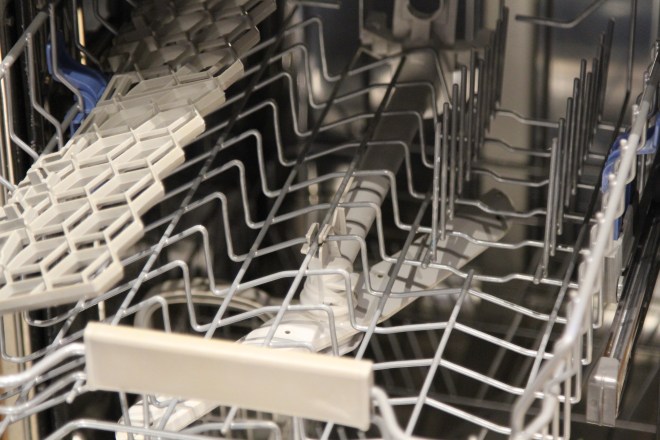
Dishwashers are still a luxury item for most people in the world. If there is one available, is it worth using or not? And could removing the crockery to dry naturally help or not?
Water consumption is often lower in a dishwasher, especially if washing up by hand uses a running tap for washing or rinsing. It is particularly important to conserve water in many areas of the world. This water scarcity is on the rise with climate change. When water usage is reduced, then this generally means hot water usage is reduced. It is this which explains how a dishwasher could be a lower energy consumption option: heating up hot water uses a great deal of energy.
If there is an option to run without a final dry cycle then it might be that energy can be saved by taking crockery out to dry naturally. However many dishwashers do not have such an option available and if the dishwasher were stopped from drying at the end it might not save any appreciable energy but instead present an extra chore to do. Let’s explore a bit more about the dishwasher cycle to understand whether this idea could work…
Dishwasher cycles broadly have three phases. During the first phase water may be heated ready for the first hot wash stages. This phase uses quite a bit of electricity to heat the water. In the second phase the hot water (with detergent) may be recirculated repeatedly for a fairly long time as the wash cycles continue and this phase uses a small amount of electricity for the pump. The third phase uses a large amount of electricity and heats new water to perform a final hot rinse and then, in many models, it is the waste heat from this that is used to dry the clean plates. If the dishwasher uses the waste heat from the final hot water rinse to dry the plates then taking the plates out before they are dry isn’t really saving anything at all.
Perhaps we might question whether a final hot rinse is necessary? How important is the rinse for removing cleaning residue from the plates? What would we need to do to use less water and energy for manual rinsing than the dishwasher rinse program? How strong are the dishwasher cleaning chemicals compared to standard detergents formulated for washing by hand?
Dishwashing by machine or by hand?
If you have a dishwasher but do not use it because you think washing by hand is more environmental then you may be right. It depends on how much water you use, and particularly on how much hot water you use, to wash the same quantity of crockery and cutlery.
A modern dishwasher may use between 10 and 15 litres of water for a full load (9 place settings). A typical domestic sink filled ¾ full is around 22 litres and a half full sink is around 15 litres. How easy would it be to wash by hand 9 place settings worth of crockery and cutlery in ¾ of a sink and rinse them in a half full sink and not under running water? Perhaps efficient washing up by hand would use 37 litres? In energy terms the dishwasher may use around 0.8 kWh (“eco” mode) to 1.5 kWh (intensive mode) of electricity for a single cycle. Simply to heat 37 litres of cold water from 10°C to 50°C requires a minimum of 1.7 kWh. If hotter water is used then more kWh is required. If rinsing with cold water then this could reduce the kWh. Now if this is heat is supplied by an efficient gas boiler then perhaps 1.8 kWh of gas is required. The carbon cost of this (according to the UK government’s carbon intensity figures for UK gas supply) would be 398 gCO2e (the contribution to global warming in grams of carbon dioxide released). The carbon cost for the dishwasher intensive mode option would be 418 gCO2e (using UK average grid values according to the UK government’s carbon intensity figures). The carbon cost for the “eco” mode option would be 232 gCO2e. Of course if renewable electricity is used then the carbon cost of the dishwasher options are much lower!
More dishwasher tips
- For small loads consider waiting until the dishwasher is at least ¾ full. Many machines have a soak function that uses under 5 litres of cold water to make sure food doesn’t get encrusted on if waiting to fill the machine later on.
- Some machines have a half load function which typically reduce the water and electricity used by around 10% and may be good for a smaller load.
- The “eco” mode button generally does save water and electricity but may take much longer (presumably because more warm water energy-efficient recirculation is happening to get similar performance to the standard hotter modes).
- Scrape off food residues from crockery and cutlery before loading. Note that there is no need to rinse or pre-wash in the sink beforehand as this wastes water.
- Read the reference guide, technical specification or instruction manual for the dishwasher. Getting to know the modes will help better use the machine and can save water, energy and money.
- Keep the appliance clean as per the instructions. Clogged filters can push up running costs and reduces the cleaning performance of the machine.
- Smaller households might prefer a slimline (9 place setting) machine than a standard (12 place setting) machine.
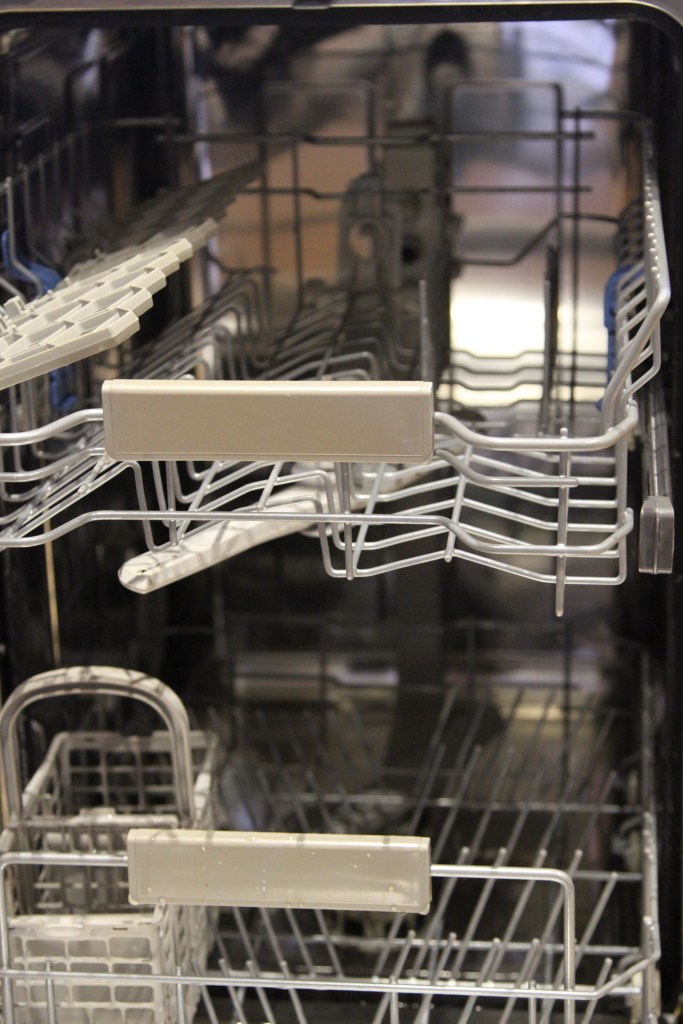
Could manufacturers do more?
- Recent studies show that doubling the insulation around dishwashers could reduce heat losses and this might be worth up to around 8% energy saving.
- Heat pumps use less electricity to raise the temperature of water, and dishwashers incorporating heat pump technology might reduce running costs. However whether the extra complexity is worth it would need to be established by looking at the whole lifecycle of the product.
- Improved durability and repairability would certainly help lower the lifecycle environmental impact.
 Living Laudato Si'