
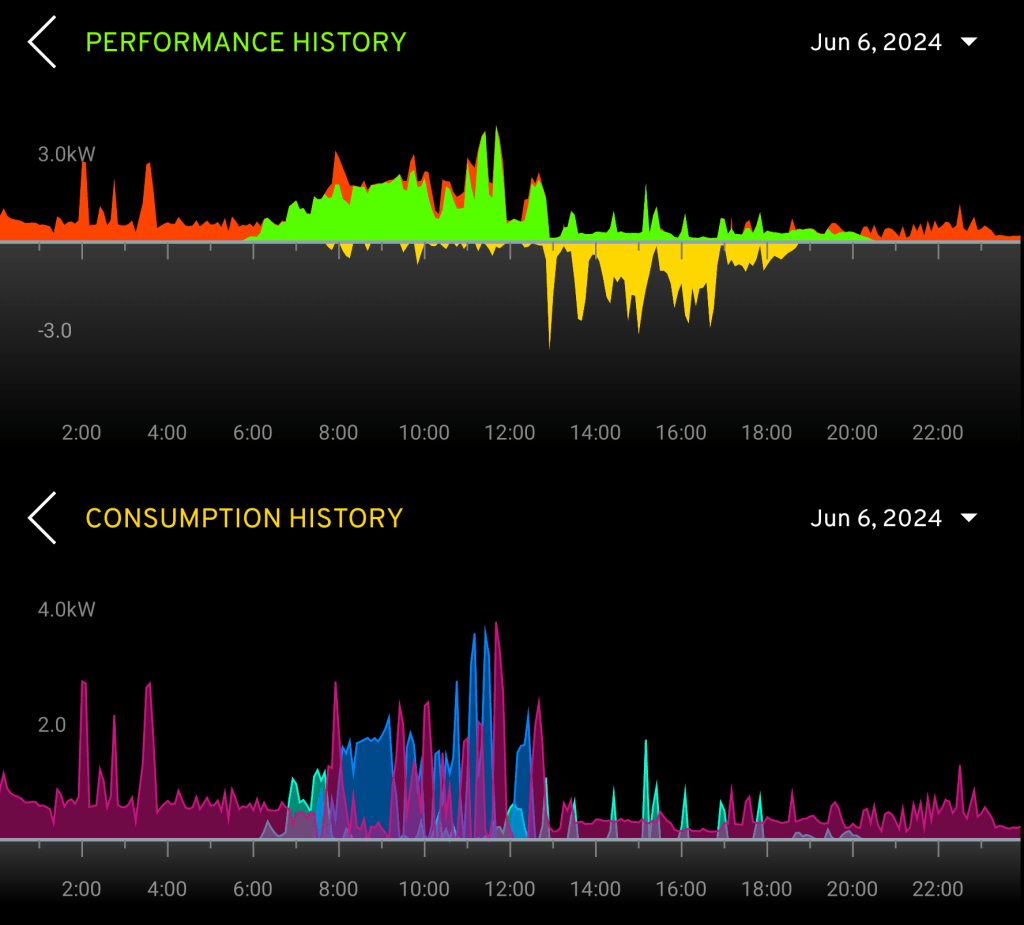
During the day in summer most solar PV installations are producing a good amount of power. Much of this power would be exported on to the local electricity grid (sometimes this exported power is called “excess generation”). Exporting excess power may also happen in an installation with a home battery when either the battery is fully charged or if the power produced is more than the battery can store at that time.
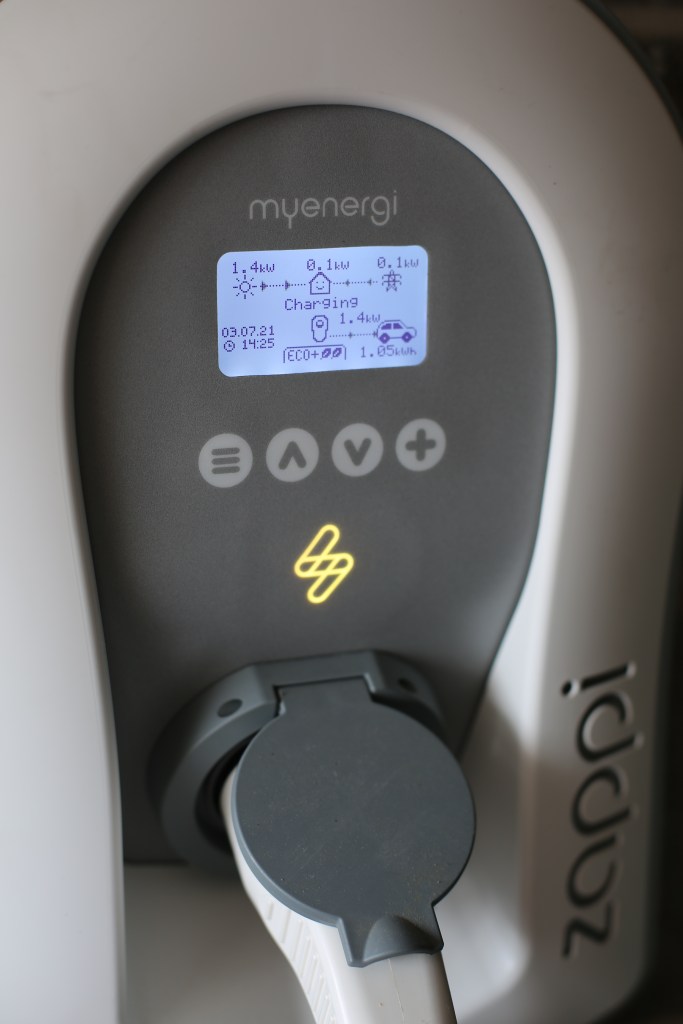
A diverter is a device that seeks to use the excess power for a power hungry task such as heating water or charging a car. It actively matches the available excess power from the solar PV panels so that little or no power is imported from the grid. When a cloud passes over and shades the panels, the amount of solar power produced temporarily reduces. A diverter will reduce the amount of power taken during this period to keep the imported power close to zero. In that way it maximises solar power used.
The car will charge using very high levels of self-generated solar power and very little imported grid electricity. The benefit of solar charging is reduced in winter due to lower solar power and may not be convenient when the car is being used during the day and requires charging at night. However the benefit over the year may still be reasonably good. A measured example is reported in the electric car section of this site. The average pence per mile for electric motoring was reduced from 6.1 to 4.6 as a result of solar charging over four years (in combination with night time charging). There is a clear financial benefit for solar charging.
There is an emissions benefit too. All electricity (including “green electricity”) has a carbon intensity (this accounts for the through lifecycle carbon dioxide equivalent emissions for that energy generation technology and these carbon intensity figures have been previously published by the IPCC). The average UK grid mix carbon intensity is published by the UK government for interested readers. In addition to this, there are transmission and distribution losses in getting the electricity generated on the UK grid to your car (power produced far away has to be transported using power lines and there are power losses associated with this and this means more electricity needs to be generated than is consumed). These emissions are published for the grid from the UK government. Using your own self-generated electricity directly to charge your car can be significantly lower emissions than even green electricity purchased from the UK grid.

 Living Laudato Si'