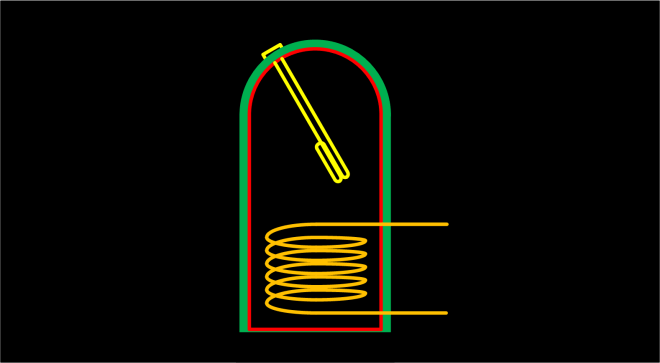
Insulating your hot water tank is a tip which is often found in advice for lowering energy bills. Most hot water tanks (often called hot water cylinders) already have some insulation fitted in the factory, normally a rigid foam type insulation.
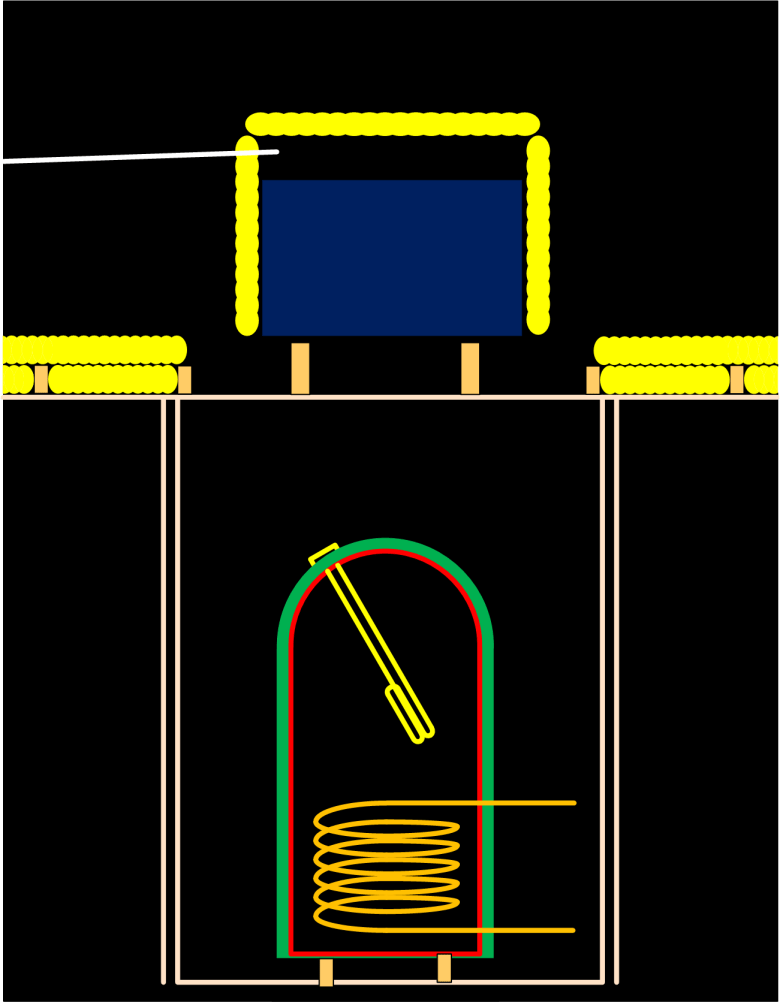
The hot water tank (or cylinder) was very common in UK homes, normally located upstairs in a central cupboard. In recent times there has been a trend for hot water on demand and some properties that used to have one have had theirs removed. The common “gravity-fed” system in the UK has a cold water tank in the middle of the roof and directly under it is the cupboard in which the hot water tank (or hot water cylinder) is located.
A conventional gas central heating system heats up water. This hot water is fed through the radiators in the house or is fed into the hot water tank coil (depending on the control valve position). The water that is heated in the system gas boiler is “boiler water” – basically water in a closed circuit with chemical additives to prevent or inhibit corrosion (called “inhibitors”). When the hot boiler water passes through the coil in the hot water tank it heats the clean water we use for washing.
Most tanks also have an immersion heater (an electrical element like in a kettle) that allows us to heat the water using electricity (particularly useful to store excess energy from solar panels as heat or otherwise used if the gas boiler breaks down).
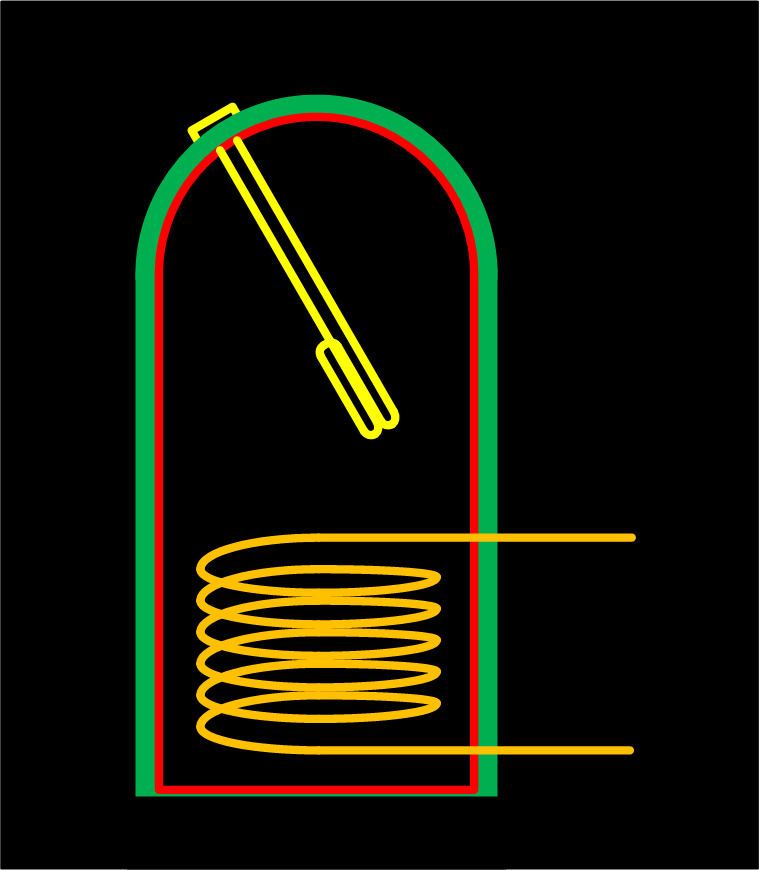
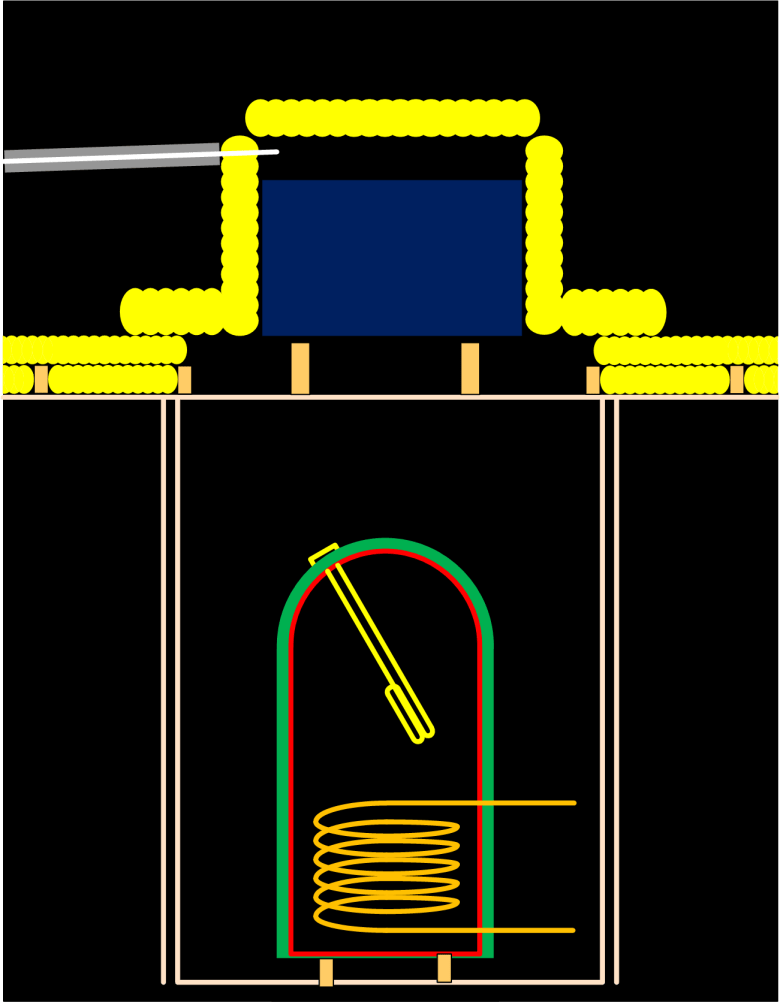
A standard hot water cylinder will have factory fitted rigid foam insulation around it. Water in the cylinder is heated using the coil (hot water from the gas boiler circuit feeds the top of the coil and cooler water at the bottom of the coil is returned back to the gas boiler). The top element is the electrical immersion heater. 
Older cylinders may be bare metal and insulation would be worthwhile adding. 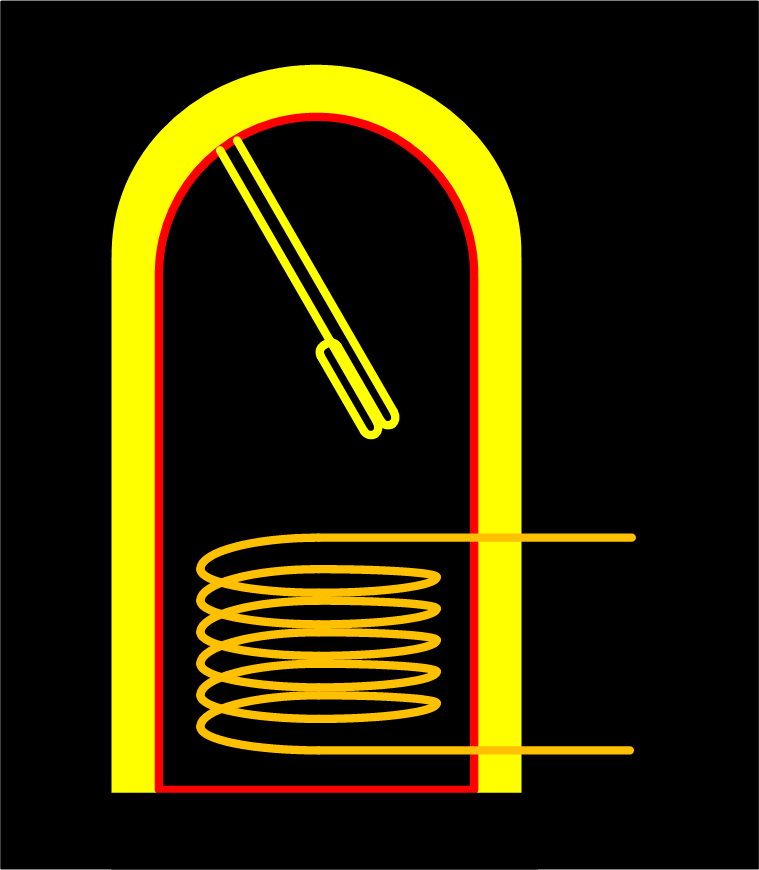
A hot water cylinder with an insulation jacket will definitely help if the cylinder was bare.
Where does the heat go? The water in the tank is preferably heated to 60°C for health and safety reasons (to prevent any risk of bacteria growth). The heat from the water in the cylinder will first heat up the cupboard the cylinder is in. Some people find this cupboard usefully warm and it can profitably be used for drying clothes too. The heat can transfer to adjacent rooms and landing through the walls and door. In winter this heat helps to heat the house, but in summer this heat is not as useful. The heat also escapes through the ceiling of the cupboard into the attic above. The attic is normally a cold ventilated roof space and the cold water tank above is insulated to reduce the risk of water in the cold water tank turning into ice in sub-zero winter cold-snaps (if the tank were to freeze then we would see damage to the tank and pipes followed by a flood on thawing). It is unsurprising that the only space in the loft that must not be insulated is the area under this cold water tank. Heat from the hot water cylinder usefully keeps the cold water tank above freezing even when the outside temperature drops well below freezing.
A well-insulated hot water cylinder reduces the rate of heat loss to the surroundings. If the hot water cylinder has no insulation then there is too much heat going to heat the space around the cylinder and the house and loft and it can become more of an effort to get the hot water cylinder up to temperature. Insulating the cylinder in this instance is really worthwhile. With a very well-insulated cylinder then quite a bit of the heat loss starts to come from the connecting hot pipes rather than the cylinder itself. With smaller levels of heat loss it is important to check the insulation in the roof and around the cold water tank too: the cold water tank should be well-insulated and the space under it kept uninsulated of course. However, try not to have gaps around the sides where heat can escape into the rest of the roof space, bypassing the cold water tank.
The insulation that is often missing or ill-fitting is around the cold water tank. Check especially between the loft insulation and the tank edges and make sure that the overflow lines are insulated (this prevents the case where a level failure on the cold water tank in freezing conditions blocks the overflow pipe and leads to a flooding risk). Insulated overflow lines mean that the water running through them doesn’t freeze before it exits.
 Living Laudato Si'