
Food Miles. Buying local doesn’t just apply to food. It could equally well be used for general products too. Product Miles. When something is made closer to home it means the pollution associated with shipping the product is more likely to be lower. The transport sector accounts for a large proportion of greenhouse gas emissions: domestic transport can be up to 30% of total domestic emissions (with around a third of that being from the transport of freight) and international transport is accounting for an increasing amount of transportation pollution. Latest estimates suggest this could be around 2% of global anthropogenic CO2 emissions for international shipping and 2% for international aviation. This ignores other pollutants such as oxides of nitrogen, oxides of sulfur and soot.
We live in a world where the web of the global supply chain is deeply rooted to almost every part of the world – from sourcing of raw materials all the way through to the final shipping. As consumers we have relatively little influence on the supply chain behind a product apart from the advertised “Made In X” label. Whilst “Made In X” generally only tells us the location of the factory of final assembly, manufacturers often engage local or regional companies to supply a sizeable portion of their operations for cost and logistical reasons. Selecting a locally-made product can help with shortening the supply chains over time.
So next time you are shopping in person or online think about reducing transportation pollution by considering where products are made. Enquire where it was made if unsure. The more we ask, the more this aspect becomes an important customer consideration and retailers and manufacturers will start to take notice.

Further Reading: International Energy Agency (IEA) pages on Transport, https://www.iea.org/energy-system/transport
Understanding the Supply Chain
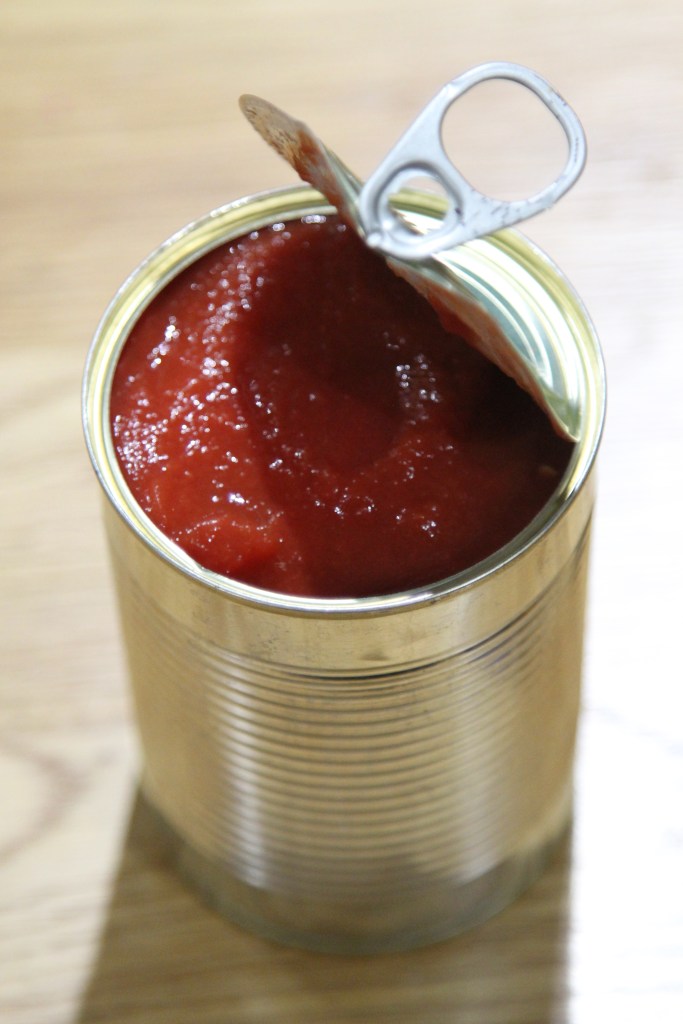
Even simple products like a tin of tomato may have a complicated supply chain behind it. The packaging may say where it was made, and it might say where the tomatoes were grown too (from using specially selected field grown tomatoes from a region all the way to the more common made using tomatoes from more than one country). In the simplest case, the tomatoes are grown in the fields local to the canning factory and whilst the can (laminated steel) and label (printed paper) may be bought in and have their own supply chains (the can coming from a steel products factory which sources its steel from a steelworks which may be made from recycled steel or iron ore coming from an open cast mine somewhere else in the world; the labels coming from a printing business using paper from a paper mill which may be made from recycled paper or virgin pulp from forests or textile fibres…), the main transport is that of the finished product. The cans being wrapped and palletised and shipped in a shipping container to a logistics hub where they are distributed by truck to the stores where we find them. It is easy to see that this gets very complicated very quickly when tomatoes are sourced from multiple countries or even if packaging is done in a different country from the harvested product. Slight differences in price of labour or materials can lead to even more steps in the logistics chains.
Only rarely does the general public get to see what a supply chain really looks like. A glimpse of the complexity of the supply chain is sometimes reported when things go wrong such as when there are product recalls or products being unavailable due to scarcity of basic chemicals or components. For example, when banned Sudan I dye was found in imported chilli powder used to make Worcester sauce in the UK in 2004/5 then this resulted in over 420 food product recalls in the UK. More recently, the global microchip shortages of 2020-2023 led to many industries including automotive and consumer electronics pausing production lines for a time.
 Living Laudato Si'