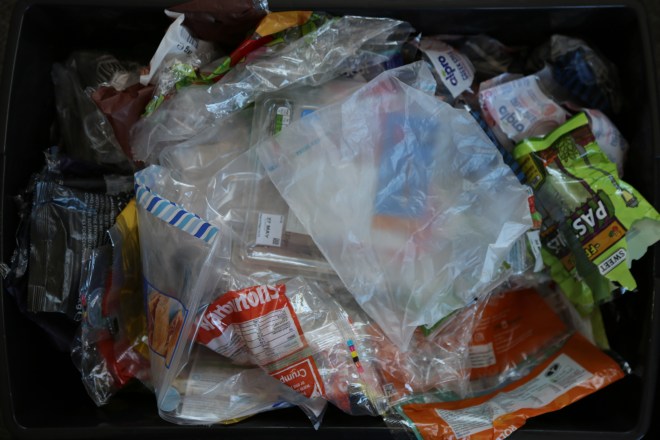
Aisles and aisles of shelves full of rows of plastic bottles and plastic bags. Some supermarkets are better than others but some seem to like plastic so much that the fresh fruit and vegetable section is a sea of plastic film, polystyrene and plastic netting.
Is all this plastic really necessary?
Plastic accounts for a sizeable (and growing!) proportion of fossil fuel product (it was around 6% in 2014 and was projected to be around 20% by 2050). Plastic packaging is currently 36% of total plastic production.
Plastic waste is one of the biggest problems in our oceans since the accumulation of large quantities of plastic is creating serious hazards for marine life. When plastics start to degrade, they may fragment into microplastics affecting most life whether on land, rivers or seas. And yet this visible plastic waste in the environment is from a small proportion of plastic waste. Quite a large amount of plastic waste is landfilled. That which stays in place in landfill can create its own problems too (even though plastic can take hundreds of years to fully degrade, decomposition products that escape into the atmosphere may include methane and carbon dioxide).
Incineration of plastic waste, apart from local pollution risks, short-cuts the release of fossil carbon into the atmosphere contributing to climate change. It is, after all, burning fossil fuels.
Some plastic waste does get recycled and this reduces the risk on the environment but this is not ideal either (continual recycling with repeated heat treatment on mixed plastics including additives and contaminants appears to increase the toxicity of the material – perhaps this is not ideal for direct food contact uses even if it might be acceptable for other uses).
Better is re-using plastic packaging including using shopping bags again and again and refilling plastic shampoo bottles, for example.
Environmentally-friendly alternatives are available for almost every purpose. Recycleable paper packaging is easy for dry goods. Re-useable or returnable containers such as glass milk bottles are possible. Plastic bags may be replaced by compostable (biodegradable) bioplastic film or recyclable paper.
Some countries have already legislated to ban single-use plastics so the industry and supermarkets already have experience with alternatives. The great thing is that supermarkets tend to take customer feedback seriously.
When you see specific examples where plastic can be replaced with paper or the amount of plastic reduced then this is certainly worth writing in about. Supermarkets and brands conveniently print their customer services or customer care address, website, email or telephone number on the packaging so it is easy to know where to write to.
Having written a few times with some success I can recommend this action. Why not pick a product a month to write in about or alternatively challenge yourself to write in every day for a week? The more people that write in, the greater the likelihood of seeing sensible change away from single-use plastic packaging in the products you use and love.
Learn more about the global plastic problem from the UN and you may consider reading about the UN’s ActNow campaign too.
Learn more about the relationship between fossil fuel energy and chemicals (and plastics) with the IEA (International Energy Agency)
For further reading on plastics try World Economic Forum, Ellen MacArthur Foundation and McKinsey & Company, The New Plastics Economy: Rethinking the future of plastics (2016) or PDF
Do you have any plastic packaging reduction success stories to share?
 Living Laudato Si'