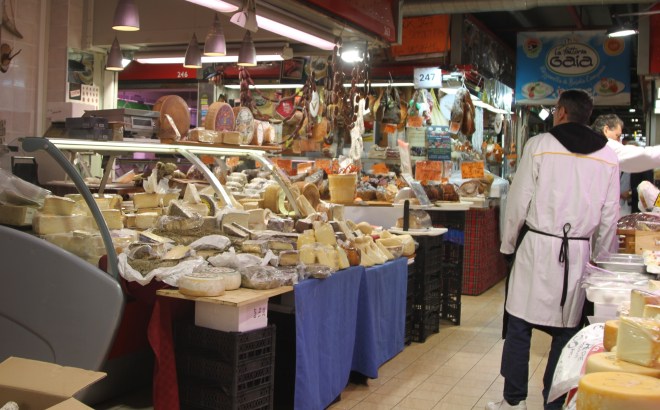
co-operative society: a society or union or persons for the production or distribution of goods, in which the profits are shared by all the contributing members.
co-operative store: a store or shop belonging to and supported by a co-operative society, with the purpose of supplying themselves with goods at a moderate price, and of distributing the profits, if any, among the members and regular purchasers.
The Oxford English Dictionary (OED), New Edition, 1989
Our buying habits have changed substantially over the last century. 100 years ago it was common to shop regularly in the neighbourhood at small family-run businesses that each specialised in a small range of products. Produce and products were often sourced locally from local farms or factories in the region. This local model had some environmental advantages, notably supply chains were shorter and the energy required to run those supply chains was low: it had to be since our ancestors did not have access to abundant affordable energy. Now we are dependent on long complex supply chains that have driven down cost through mass production and industrial-scale farming. The supply chains also provide options our ancestors would never have had, such as exotic foods and strawberries all year round!
The encyclical Laudato Si’ calls us to look at how we’ve structured society and asks questions that may feel somewhat radical. Laudato Si’ 49 challenges us: “we have to realize that a true ecological approach always becomes a social approach; it must integrate questions of justice in debates on the environment, so as to hear both the cry of the earth and the cry of the poor“. “We have the freedom needed to limit and direct technology; we can put it at the service of another type of progress, one which is healthier, more human, more social, more integral. Liberation from the dominant technocratic paradigm does in fact happen sometimes, for example, when cooperatives of small producers adopt less polluting means of production, and opt for a non-consumerist model of life, recreation and community.” Laudato Si’ 112.
How can we rebuild a society that values local cooperation? That provides a sustainable model for retail? The endless agglomeration of retail businesses into a handful of global behemoths concentrates wealth and power into the hands of a few and the increasing use of automation and Artificial Intelligence (AI) risks reducing job opportunities at the customer-facing and delivery end. Pope Francis repeatedly described the importance of work as being necessary for human dignity. Reclaiming at least some businesses to be cooperatives of people at a local level may be just what we need for rebuilding both fraternal trust and ecological respect.
When a group of people come together to create a local cooperative, see if you can support them by providing encouragement and by becoming a customer.
Let’s put the people and planet at the heart of the local community once more.

 Living Laudato Si'