According to the latest textile industry materials market report, synthetic fibres (plastics) accounted for 65% of the world fibre volumes in 2022 and plant fibres (including cotton and linen) accounted for only 27%. It is also clear that volumes have increased and are projected to increase even more. In 2022 we produced 14.6 kg of fibre (synthetic and natural) per person. In 1975 we produced 8.3 kg per person. Interestingly, in 1975 natural fibres accounted for ~63% of the market (of which cotton was ~43%), whilst in 2022 this had dropped to 29% (cotton was 22%). So our per capita consumption of textiles is increasing and the proportion of this from plastics is increasing.
It is sometimes difficult to find garments made exclusively from natural fibres. Even clothing marketed as cotton may now have 1-5% elastane (plastic) blended in (cotton “with stretch”).
It is easy to see that we are increasingly reliant on fossil-derived plastics for textiles. This is is clearly contrary to our need to reduce our use of fossil fuels and manage climate change. What few commentators are talking about, however, is what happens to all this plastic fibre when the clothing is thrown away or even when the garments are worn or washed. Isn’t this fluff just microplastic pollution? Well, yes. Researchers studying microplastics recognise this as a major source of microplastic pollution (alongside tyre wear, paint, cosmetics and the crumbling of larger plastic objects such as the disintegration of discarded plastic bags). Microplastics are more than just a giant man-made experiment on our ecosystem – adverse effects are being observed and documented. It is clear that we need to stop this harmful pollution on our ecosystems, our children and ourselves.
The industry is starting to look at increasing its recycling rate in order to help it reduce its greenhouse gas emissions, however it is acknowledged that blended fibre garments are much harder to recycle. “The proliferation of mixed textiles in the apparel industry – such as cotton and polyester or elastane – poses significant challenges when it comes to recycling post-consumer textile waste” [Materials Market Report].
Not only are mixed synthetics and blended textiles harder to recycle, they are harder to repair. A stretch fabric is quite a challenge to stitch by hand or by a domestic sewing machine.
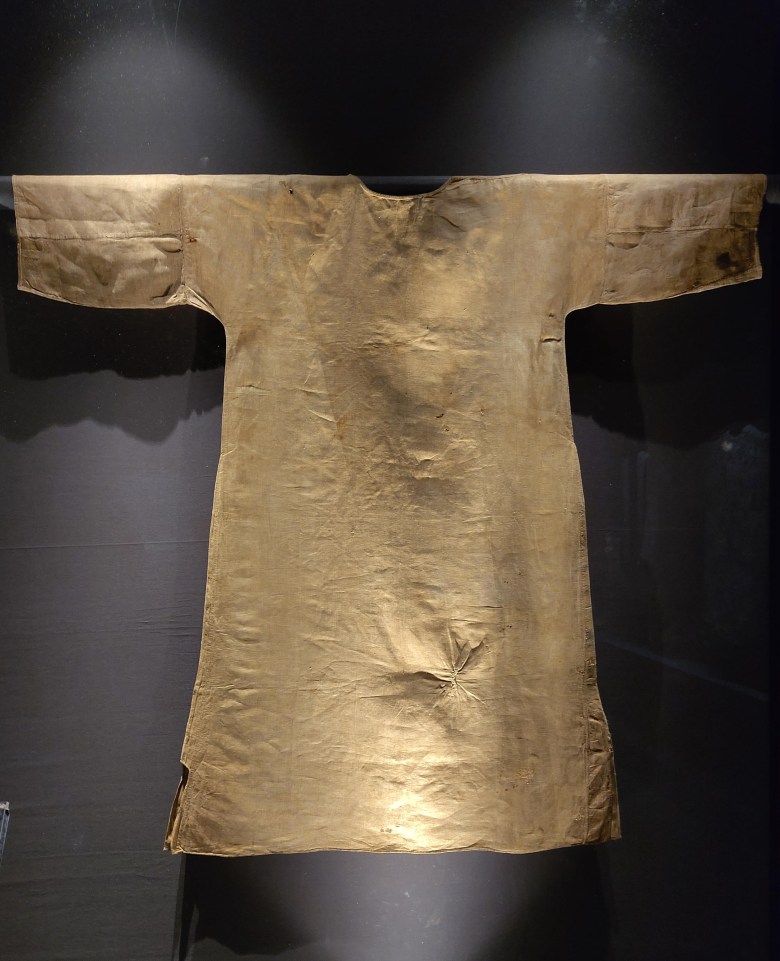
Claims that the addition of plastic fibres in blends increases lifespans does not appear to be supported by evidence. A high quality natural fibre can outlast modern textiles. In fact, evidence for durability of natural fibres comes from our ancestors: garments and fabric fragments from around 2000 years ago (made mainly of flax or linen) attest to their longevity. The linen robe of Saint John the Evangelist from the Sancta Sanctorum is preserved and on display in the Vatican Museums (recently carbon dated to late 1st Century to early 3rd Century AD).
What common natural fibres are available today? Natural fibres include plant based fibres (27%) of cotton (22%), flax/linen (0.3%), hemp (0.3%). Other plant based fibres include jute, coir, sisal, abaca, ramie, kenaf, kapok and agave. Animal fibres (1.6%) are mainly wool (1%), feathers/down (0.5%), silk (0.1%). Note that the percentages are for 2022 global market volume.
To reduce plastic pollution and reduce emissions that contribute to climate change we need to
- Choose garments made from 100% natural fibres
- Select organic plant fibres for the lowest pollution where available
- Choose garments that last longer (spend more less frequently)
- Avoid plastic fibres and mixed blend textiles
- Repair minor damage rather than throw away (locate a local repair service if you prefer not to do it yourself)
- Recycle when the garment is worn out
- Give clothes away that are unwanted
- Write to the retailer if you struggle to find 100% natural fibre garments (a quick letter or email by many will help them have the confidence to implement more sustainable buying options)
Further Reading
Materials Market Report 2023, textileexchange.org
See also
.
 Living Laudato Si'