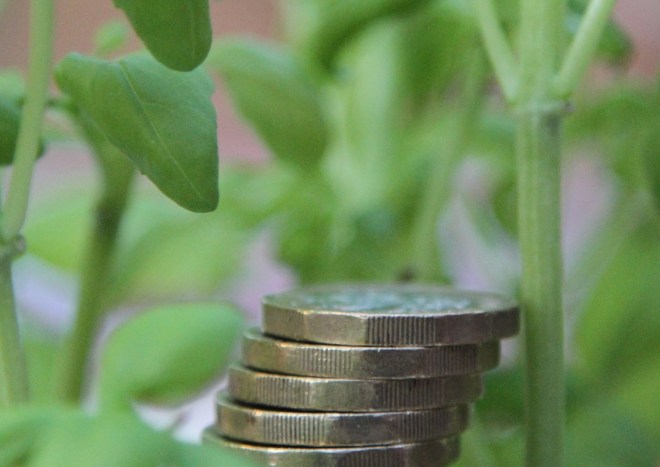
An investor is in a position of power: the choice to support economic activity aligning with one’s values. Catholic social teaching has, for many years, had care for God’s creation as one of its seven core themes. The encyclical Laudato Si’ underlines the importance of this theme at this fragile time for the planet and for all of God’s creatures that inhabit it. Sustainability might not be at the top of the list when making investment decisions, yet perhaps it should be for the sake of those that are yet to come. What better way of demonstrating intergenerational solidarity than to heed the message of Laudato Si’: “[a] technological and economic development which does not leave in its wake a better world and an integrally higher quality of life cannot be considered progress” [LS 194].
How can investing for sustainability work when many options seem so far away from the goals? Perhaps a simple rule is to select the most environmental choice in any asset class or industry sector. Furthermore, investment confers the power to write to those businesses explaining that their continued push for sustainability will be rewarded with continued support. Making investment more of an active task. As an investor, you become an owner or co-owner of the asset and with that comes ownership responsibilities. This includes providing guidance such as through voting on shareholder resolutions. Getting together with sustainably-minded co-investors can increase the persuasiveness of the need to set an ecological strategy. Even in an industry sector that is fairly carbon-intensive today, rewarding the leading sustainable choice sends a message that decarbonisation efforts are worthy and encourages competition for green funds.
Don’t forget that one sustainable investment option may be very close to home: decarbonisation of your house or means of transport. Financial returns can be very attractive (see how to work them out for heat pumps, electric cars or find the recipe for calculating your solar panel output here). Older and complex buildings will have a route to decarbonisation too – take a look at the return on investment summary for churches here and how to develop a return on investment calculation here).
| Asset Class | Example Sustainability Questions | See Laudato Si’ (LS) |
|---|---|---|
| Stocks (shares in public companies) | Is the company strategy aligned to net zero? Is the company decarbonising its operations? Has the company got a good environmental record (pollution incidents, waste and recycling, supplier standards, …)? Does it support efforts to improve biodiversity? Is the company product line becoming more ecologically sustainable? | LS 26, LS 39, LS 180, (LS 20-22, LS 195) |
| Fixed income (bonds) | What will the capital raised be used for? For corporate bonds – see questions for stocks above. For government bonds: Is the country at the forefront of investment in ecological research, protection of natural ecosystems, or supporting development of sustainable technology? Is it for specific projects? Does the country contribute to international development support for climate adaptation? Is it a green bond? | LS 26, LS 42, LS 177, LS 180, (LS 194-195) |
| Cash | Limited sustainability options. Individuals could look for bank accounts with good sustainability ratings. | – |
| Foreign currencies | Limited sustainability options. Could favour holding foreign currency for countries ahead in the energy transition or with better biodiversity protections? | LS 35, LS 58 |
| Real estate | Is there decarbonisation happening? Is there a commitment to complete decarbonisation? What are the environmental liabilities? | LS 21, LS 26, LS 150, (LS 180) |
| Infrastructure | Is the infrastructure project compatible with net zero? For example, for transport, is it closer in environmental credentials to electric trains than to an airport in the desert? | LS 180, (LS 35, LS 147, LS 150) |
| Private equity (shares in private companies) | Not normally open to most investors other than via the venture capital funds of large institutional investment companies or multinationals. Similar sustainability questions to those for stocks above. | See stocks |
| Commodities | Is the product one with a low carbon footprint? Is the commodity useful to achieve net zero? | LS 165, (LS 22, LS 32, LS 189) |
| Cryptocurrencies | Not normally associated with sustainable investment due to large energy demands of bitcoin mining. | (LS 56, LS 189) |
| (Funds) | (Funds are not an asset class in their own right since they are made up from many of the asset classes above – very often they are heavily weighted to stocks and fixed income) | – |
So if you are an investor, select investments after thinking through the ecological aspects (an integral ecology) and the effect on future generations (intergenerational solidarity), and consider becoming a more active investor who writes to express these thoughts to those that manage these investments on your behalf. Let your investments be a force for good in the world!

See also
 Living Laudato Si'