
We’ve covered the benefit of a diverter for charging an electric car before (see this article). Here we look at the use of a diverter for heating hot water with the excess electrical generation from solar photovoltaic panels (solar PV).
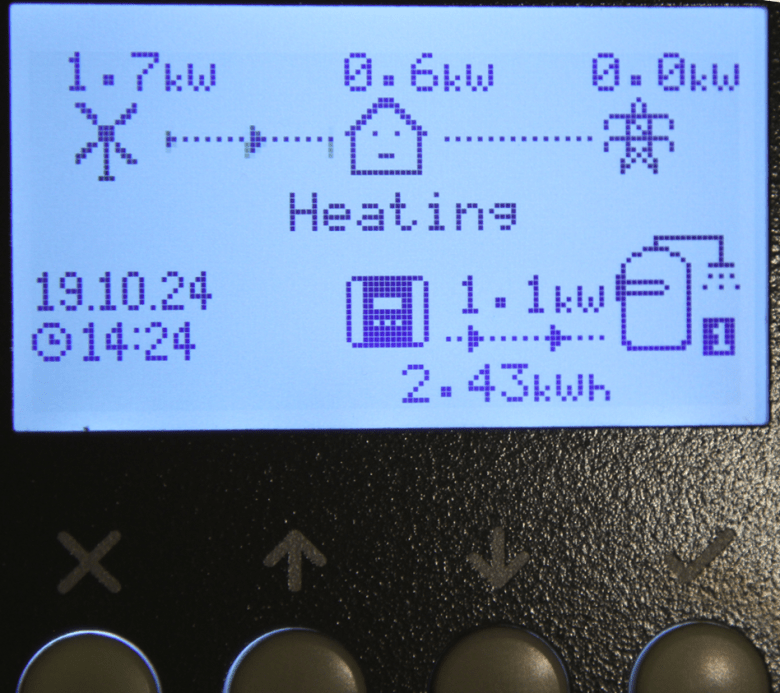
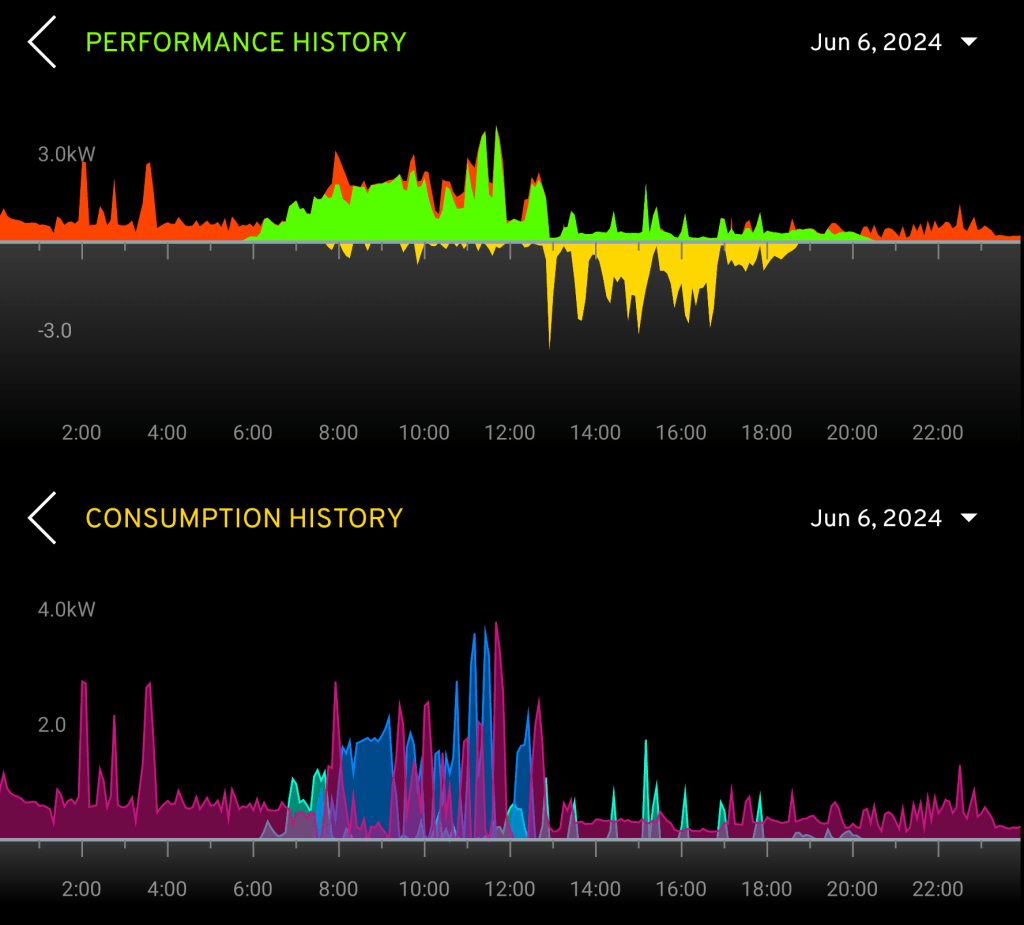
The rationale for a diverter is quite simple: excess power generated, especially during the middle of the day in summer, is used to keep the water in the hot water tank hot by powering the immersion heater coil in the hot water tank. Most diverters will set the power to the same level as that which would otherwise be exported so that the water is heated effectively for free.
Cost-wise, the diverter for heating hot water has a rapid payback. This is because the extra cost of the diverter connected to the existing tank and immersion heater element is small. And this cost is rapidly equalled and exceeded by the cost savings from not having to heat the hot water tank as much by other means.
| Year | Excess solar PV energy used to heat water (diverter) | Total energy used to heat water |
|---|---|---|
| 2021 | 700 kWh | Not recorded |
| 2022 | 684 kWh | 1147 kWh |
| 2023 | 711 kWh | 1221 kWh |
| 2024 (until 19 October) | 570 kWh | 825 kWh |
The diverter can provide all the heat required between early March and early October. Additional heat is required in the winter months when there is little excess solar PV generation (typical of UK solar installations).
In a typical year we save around 700 kWh by using the solar PV diverter to keep the water hot. Current electricity and gas prices in the UK (see Ofgem price cap tables) are 24.50 p/kWh for electricity and 6.24 p/kWh for gas. The saving per year is approximately £49 if we would normally use an efficient gas boiler of 90% efficiency or £172 if using direct electrical heating with an immersion heater (if using a heat pump for providing hot water then divide £172 by the Coefficient of Performance of the heat pump for the hot water supply).
Laudato Si’ tells us that it is not all about cost of course. The purchased energy saving also translates to savings in greenhouse gas emissions (GHGs). Providing 700 kWh worth of heat from gas requires around 780 kWh of gas to be delivered (for a 90% efficient boiler). The GHG saving by using a solar PV diverter if normally using gas is 167 kgCO2e per year (taking into account direct emissions of burning the gas and upstream Well-to-Tank emissions to get the gas from the gas field into the distribution network, as per official figures published by the UK government). If you are normally purchasing average UK grid electricity and heating the water electrically then the saving is 193 kgCO2e per year (also calculated from UK government figures for indirect emissions of the average grid mix and the losses in Transmission and Distribution and the Well-to-Tank emissions for that supply). If you directly purchase electricity from a low carbon generator (such as a local wind farm) then your savings would be less.
As explained in the car diverter article, using as much of your self-generated electricity as you can for your energy needs can result in significantly lower emissions even if you normally purchase deep green electricity from the UK grid (deep green electricity is that which is directly purchased from renewable generators and your money is directly financing the construction of new renewable capacity, as opposed to those suppliers who allocate a portion of their green energy to you or purchase a certificate after the event to justify the green claim).
To understand how solar generation varies through the seasons, why not look at our STEM activities for solar power (for 7-10 year olds, for 11-13 year olds or for 14-16 year olds)?

 Living Laudato Si'