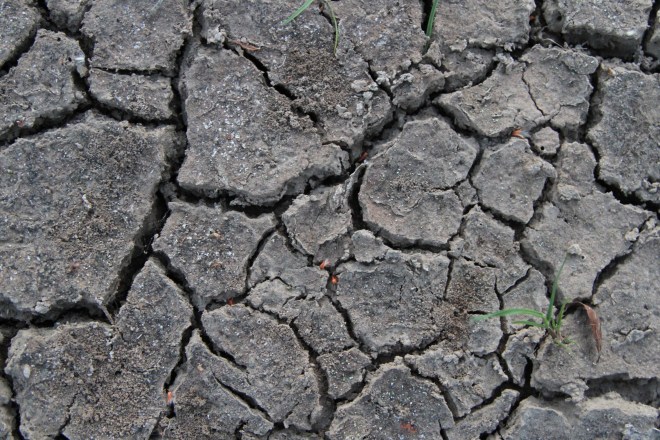
What sort of climatic changes might affect people and communities?
Temperature rise, heat waves and increased evaporation of moisture from soils leading to higher probability of droughts and higher severity of droughts. In some areas this is leading to desertification.
The changes in rainfall patterns: some areas will experience less rainfall whereas other areas may experience more rainfall. Rainfall may occur at different times of the year or may fall as intense precipitation over shorter periods leading to flash flooding. With higher temperatures we see higher levels of evaporation from the sea leading to greater quantities of water vapour in the atmosphere.
Higher ocean temperatures also lead to stronger storms, hurricanes and cyclones.
And of course we are experiencing gradual rise in sea levels due to warmer oceans and meltwater, especially from the melting of land-based ice and glaciers. Small increases in sea level mean greater risk of flooding for coastal communities and low-lying island nations. Sea water, with its salt content, damages farmland when the sea floods low-lying agricultural land.
Climatic changes lead to extra pressure for resources
In some water scarce locations there is competition for precious water resources. For example there may be industrial-scale agriculture requiring irrigation for crops that are exported whereas the smaller subsistence farmers and indigenous populations may struggle. This struggle may be inadvertently aggravated by the purchase habits of people far away: are we contributing to water pressures by buying out-of-season fruit and vegetables from these dry regions? Should we be supporting the development of more sustainable farming or funding alternative sustainable water supplies for these regions? Or looked at another way, should the fair cost of these crops requiring more water than the local area can really sustain be higher to allow some of the money to be used to repair the damage they cause? How can we turn that export which causes harm to one that is truly sustainable? Maybe this is what “distributive justice” is in Laudato Si’ 157?
Climate change adaptation
Many areas experiencing the negative effects of climate change could benefit from climate adaptation. Adaptation may be as simple as changing crops to those that are better suited to the evolving climate or as expensive as building sea defences or adding in sea water desalination plants to provide alternative water supplies. Adaptation requires effort, education and investment.
What does climatic change lead to when adaptation is too expensive?
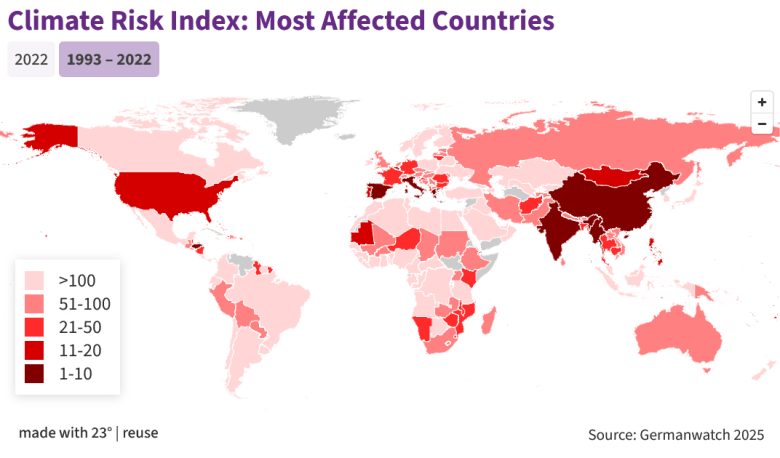
Consider what affected communities do when they experience repeated crop failures due to the encroachment of desert, more regular droughts, or salt water inundation or flooding? Or what happens when homes are destroyed? Is there not pressure on communities to move to survive? We are entering an era where climatic changes (caused by our collective cumulative emissions) increasingly drives migration. Many simply move away from the land towards the cities or relatively unaffected areas within a country after experiencing crises. The United Nations describes them as internally displaced people. Some consider leaving their homeland completely. As a society, are we aware that for an increasing number of migrants and refugees, climate change is a major factor? The UNHCR writes that “[t]he climate crisis and human displacement are increasingly interconnected”. Laudato Si’ 48 on Global Inequality describes this too. Can we really ignore that cause? Is it right and moral to refuse to act on climate change and simultaneously reject the story of the Good Samaritan? Are we both the robber and the High Priest?
Laudato Si’ 25
“Climate change is a global problem with grave implications: environmental, social, economic, political and for the distribution of goods. It represents one of the principal challenges facing humanity in our day. Its worst impact will probably be felt by developing countries in coming decades. Many of the poor live in areas particularly affected by phenomena related to warming, and their means of subsistence are largely dependent on natural reserves and ecosystemic services such as agriculture, fishing and forestry. They have no other financial activities or resources which can enable them to adapt to climate change or to face natural disasters, and their access to social services and protection is very limited. For example, changes in climate, to which animals and plants cannot adapt, lead them to migrate; this in turn affects the livelihood of the poor, who are then forced to leave their homes, with great uncertainty for their future and that of their children. There has been a tragic rise in the number of migrants seeking to flee from the growing poverty caused by environmental degradation. They are not recognized by international conventions as refugees; they bear the loss of the lives they have left behind, without enjoying any legal protection whatsoever. Sadly, there is widespread indifference to such suffering, which is even now taking place throughout our world. Our lack of response to these tragedies involving our brothers and sisters points to the loss of that sense of responsibility for our fellow men and women upon which all civil society is founded.”
How can we find out how to help?
One way of helping is by supporting climate change adaptation initiatives for those regions badly affected by climatic stresses. We can
- Find out where help is needed and let people know
- Write to our political representatives to remind them of this ongoing situation affecting many of the poorest parts of the world so that affected communities are not always ignored
- Consider our purchasing habits to avoid adding extra stresses to affected areas and preferably finding ethical suppliers such as cooperatives in a region and supporting Fair Trade
- Look to support charities that work on the ground in affected areas to build climate resilience for the poorest in the community (e.g. CAFOD or Caritas or one of the water charities to start with)
- Investigating alternative funding initiatives, perhaps those through ethical carbon offsets or green investments where additionality is support for local communities or climate adaptation
Further reading
The IPCC Sixth Assessment Report was previously summarised on livinglaudatosi.com:
- Read a summary of the Current State here
- Read a summary of the Future State here
- Read a summary of Climate Risks and Adaptation here
- Read a summary of Limiting Future Climate Change here
The UNHCR (United Nations Refugee Agency) Myths and Facts on climate change and displacement
- The Issue of Water (Chapter 1, Part II: 27-31)
- Global Inequality (Chapter 1, Part V: 48-52)
- Dialogue and international leadership, Laudato Si’ 175
 Living Laudato Si'